Product architecture
What Openoox tried to combine
Historical Openoox was not a single feature—it was a stack of familiar web tools re-composed as a personalized start page. Descriptions evolved between beta and 2015 funding; treat feature lists as era-specific.
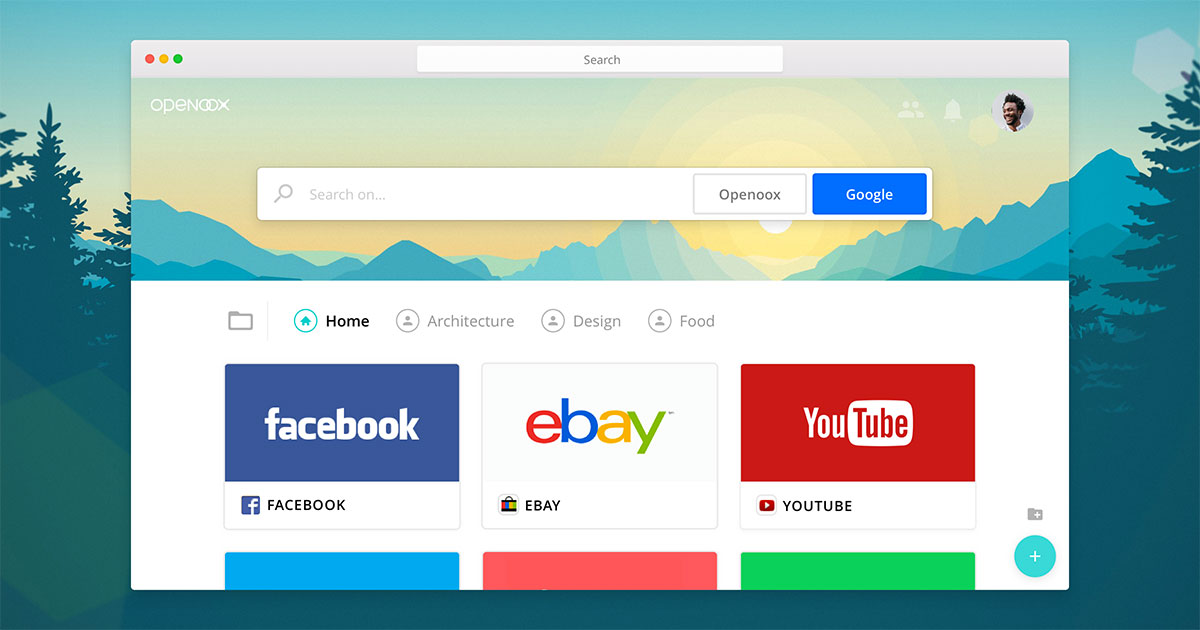
Start page + bookmark manager
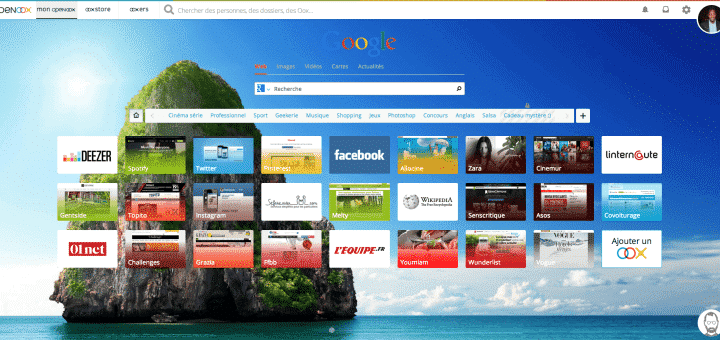
JaimeLesStartups and Bonjour Idée summarize the core promise: one customizable page with search engines (Google, Bing, Yahoo!, Qwant, DuckDuckGo in FrenchWeb’s demo list), visual favorite tiles, and sorting folders—accessible across browsers and devices.
Oox
Oox was the branded unit for a saved site—typically shown as a tile with preview imagery in third-party reviews. Bonjour Idée’s archived walkthrough lists creation via search, URL entry, drag-and-drop, and imports from existing bookmark files, with thematic folders (news, cinema, travel, shopping, and others).
Second search bar
Bonjour Idée describes a secondary bar to search within one’s own favorites and those shared by friends or the wider Openoox community—distinct from the primary web search engine choice.
Genius
Journal du Net (2014) introduces a “Genius” bot—visually associated with Steve Jobs in that article—recommending sites by interest during onboarding. A 2015 blog review by John Paul Aguiar describes dragging a folder onto Genius to surface popular sites in that topic inside Openoox. These accounts suggest a recommendation layer, not a general-purpose AI assistant in the modern sense.
Social & collaborative folders
Founder interviews and JaimeLesStartups emphasize public folders, following friends’ updates, and optional password-protected collaboration—positioned between bookmark utilities and social networks like early StumbleUpon-style discovery.
Oox Store
JaimeLesStartups references an “Oox Store” as a next-generation directory—paired with Genius for interest-based discovery. Details of inventory or partnerships were not independently verified here.
Private search (2015 reporting)
ITespresso’s funding piece highlights a private search engine over one’s archived articles, videos, and links—aligning Openoox with personal knowledge retrieval, not only navigation.
Browser extensions
Chrome and Firefox extension listings marketed Openoox as a customizable new tab/homepage with bookmark saving. Manifests point to openoox.com as the homepage override. Extension updates years later do not confirm the live service remained operational.
Branding & visual identity
Archived social meta tags referenced CloudFront-hosted Openoox preview images and @Openoox Twitter branding. Historical press screenshots (e.g. Bonjour Idée) show a tile-based homepage layout. This archive’s teal-and-coral palette is a modern editorial interpretation for readability—not a certified reproduction of official brand guidelines.
Business model (as described historically)
- Self-funding at launch (01net, JaimeLesStartups).
- Advertising / AdWords-like models discussed without homepage ads per 01net.
- Sponsored Oox placements compared to promoted posts on social networks (JaimeLesStartups).
- Freemium professional tiers and B2B coupons (Journal du Net).
None of the above should be read as current pricing or active monetization.